My 1100km+ Solo & Self-dependent hike Gear List: What I Carried Across Western Himalayas
How To Choose the Right Hiking Gear for Month Long Hike
For 1100+ kilometers across the Indian Western Himalayas, my gear was the nearest emergency contact I could reach.
If you follow incidents in the Himalayas, you’ll notice a pattern. Many of them happen between the last camp and the summit. Hikers push for the top with only a small daypack – no shelter, no food, no backup plan.
Take Sahastra Tal for example. A sudden spell of bad weather trapped a group, and many lost their lives because they had no shelter to survive in.
When you hike alpine style and minimalistic, everything you need to survive is on your back, within arm’s reach at all times. That’s why choosing the right gear was my utmost priority.
In India hiking community is not much developed and so is the reason of lack of access to “Ultralight Gears”, To get the Ultralight Gears you have to spend lot of dime. In case you can’t spend, you have to use the only present and less costly Decathlon Gears. Same is the case with me.
Before this traverse, I tested every single piece of gear on short, multi-day hikes. That’s where I learned what to carry and what to leave behind.
A backpack filled with comfort items is sustainable for a week. But when you are out for more than a month, averaging up to 30km a day and crossing high-altitude passes above 4500 meters – comfort becomes a burden. It’s just not sustainable.
So I made one rule: “Carry what you need, not what you want.“
Uttarakhand and Himachal Pradesh have a completely different terrain, altitude, and weather from Ladakh. In Uttarakhand and Himachal, the trail throws sudden, steep climbs and descents at you. You can’t do more than 15-20km a day there.
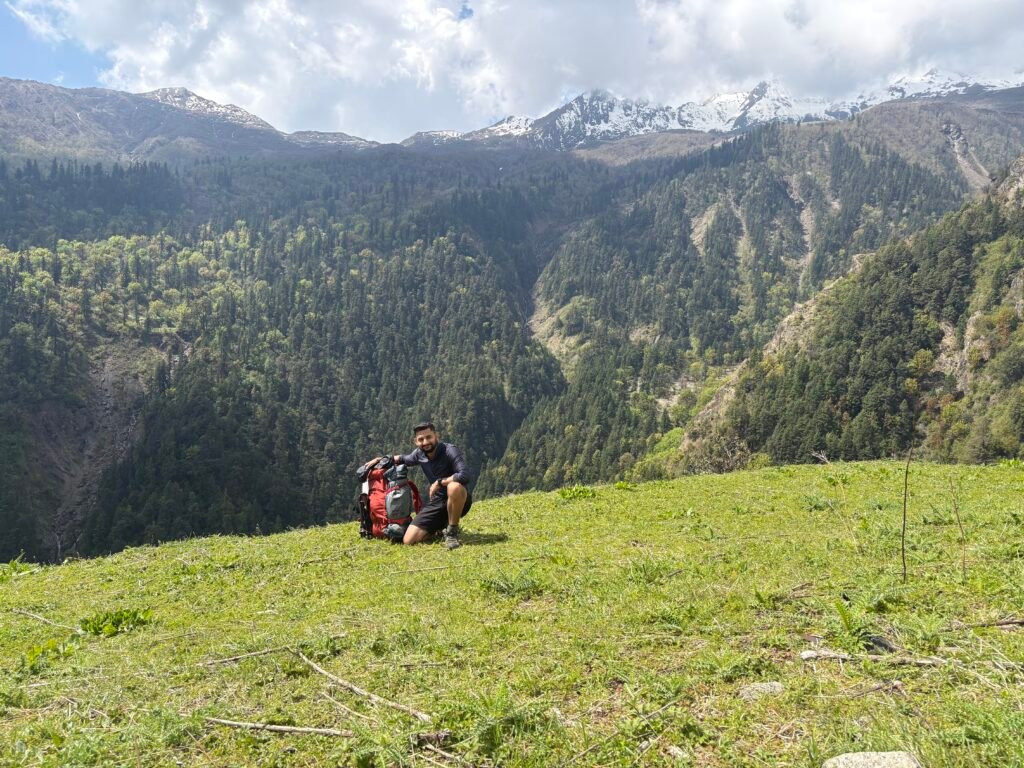
In Ladakh, it’s the opposite. The ascent is gradual. You can see the trail for kilometers ahead, it’s mostly straight, and you can easily cover more than 20km a day.

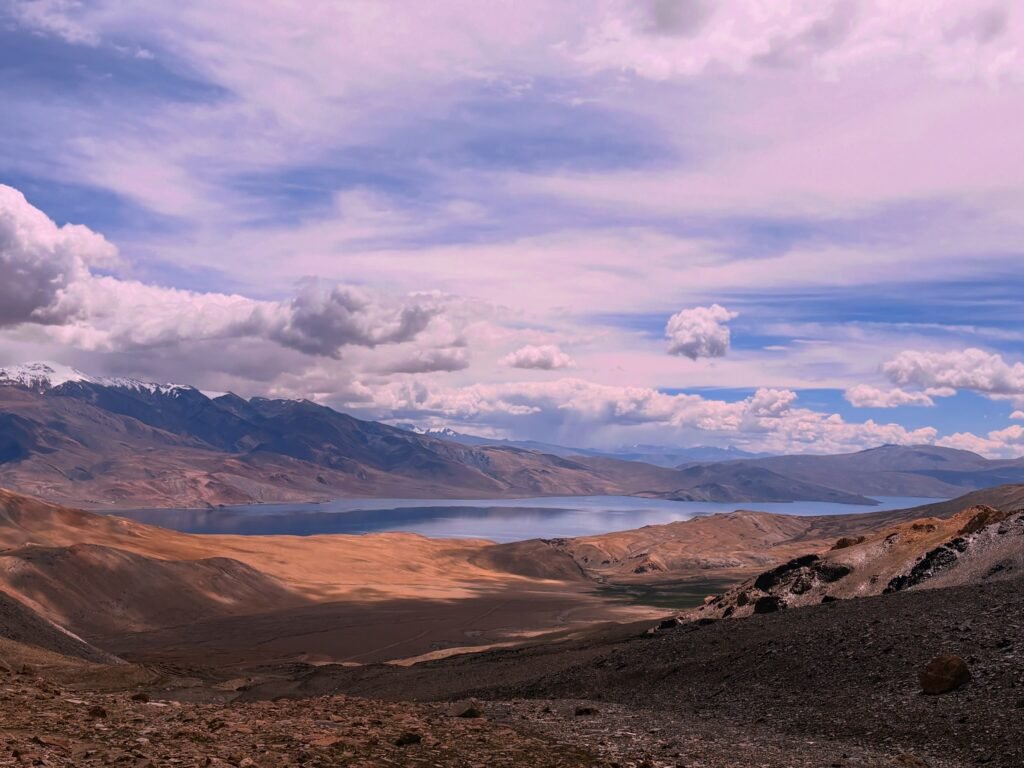
In both terrains, one thing remains true: lighter gear lets you cover more distance, move faster, and stay safer.
I used this setup from my lowest camp at 1500 meters to my highest sleeping camp at 5200 meters.
Section 1: Uttarakhand & Himachal Pradesh – The Gear List
This was my base kit for the green, steep, and rainy section. Total weight: 10kg excluding food.
Shelter & Sleep
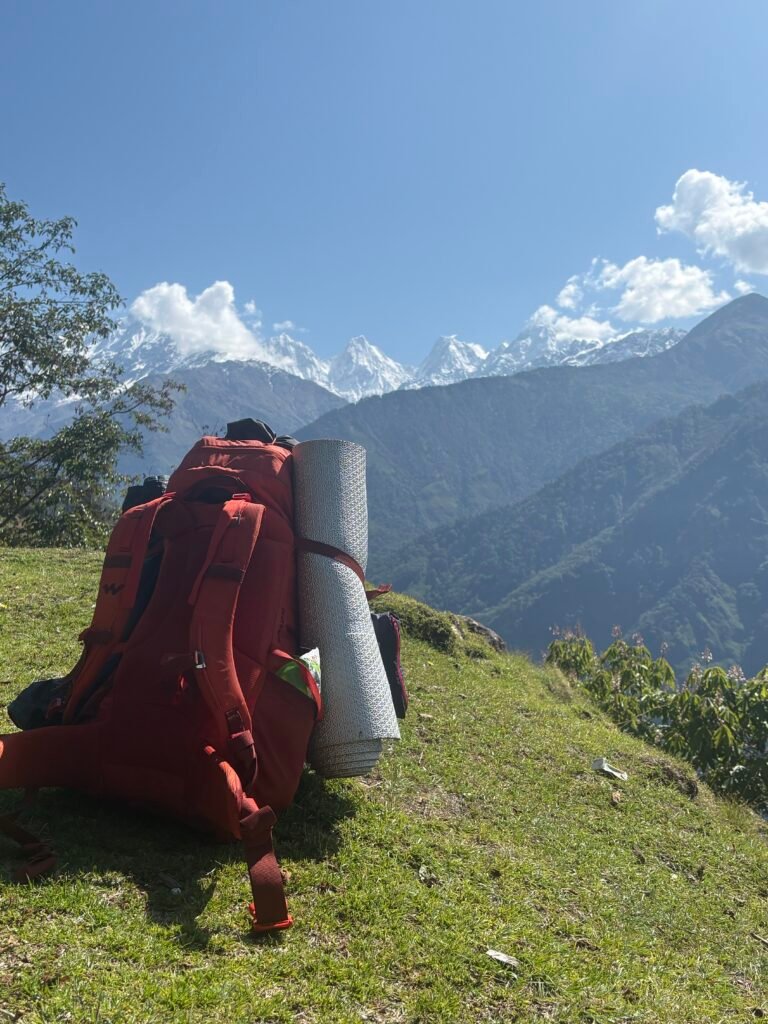
Backpack: Wildcraft 40L Rock and Ice https://wildcraft.com/rock-ice-40-l-ruckack-light-red-11719
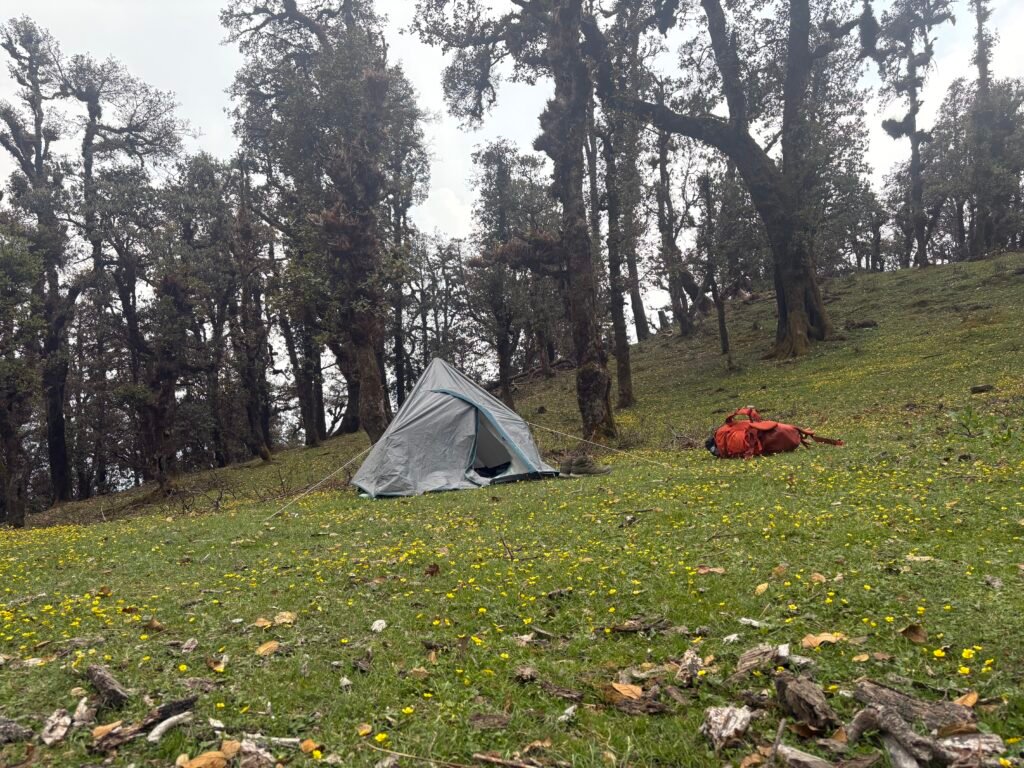
Tent: Decathlon 2-Person Tent [MODIFIED] – I removed the original tent poles to save weight and used a single trekking pole in the center. Weight with poles: 2.5kg. Weight after mod: 1.7kg. That one mod saved me 800g. https://www.decathlon.in/p/8513471/2-person-camping-tent-mh100-grey
Sleeping Bag: Borrowed from a friend from Leh. Rated -5°C, weighs 1kg. I tested it till -2°C with 3 layers on and it was comfortable.
Sleeping Mat: Decathlon Sleeping Mat. https://www.decathlon.in/p/5591048/trekking-foam-mattress-m100-grey
Trek Support
5. Trekking Poles: 2x Tripole Gear Trekking Poles
6. Shoes: Decathlon Quechua MH100 Hiking Shoes. https://www.decathlon.in/p/8553121/men-mid-ankle-waterproof-hiking-shoes-with-non-slip-outsole-khaki-mh100
7. Headlamp: 1x Headlamp.
8. Water Bottle: 600ml Mountain Dew bottle – The lightest, most replaceable bottle you can find.
Clothing System – Hike & Sleep Separate
9. Hiking Clothes: 2x Kalenji Running Dry-Fit Shorts and 2x Quechua Dry-Fit Full-Sleeve T-shirts. I hiked only in these. https://www.decathlon.in/p/8519884/men-running-shorts-quick-dry-lightweight-breathable-run-dry-black
10. Camp & Layering: 1x Trek Pant, 1x Fleece for cold nights, 1x Jacket [bought from a retailer in Delhi, works great with proper layering]
11. Socks: 2 pairs of Trekking Socks + 1 pair of Merino Wool Socks for sleeping. https://www.decathlon.in/p/8647192/adult-high-wool-hiking-socks-2-pairs-hike-900-grey,
12. Rain Protection: Quechua Raincoat – Non-negotiable for Uttarakhand and Himachal. https://www.decathlon.in/p/8585162/men-full-zip-waterproof-rain-jacket-and-windcheater-blue-black-mh150
13. Accessories: Slippers for camp, 1x Decathlon Cycling Bandana – Very soft, light, and versatile. https://www.decathlon.in/p/8569855/cycling-bandana-neck-warmer-blue
Electronics & Cooking
14. Power: 20,000 mAh Power Bank + Phone Charger
15. Camera: DJI Action 5 Pro
16. Kitchen: 1x Gas Stove + 1 Butane Cylinder + 1 Small Pan – I rarely used it in this section, but it was my backup.
Emergency & Food
17. Emergency Ration: 3 packets of pasta, 3-4 ORS packets, and 2-3 headache tablets. Honestly, I didn’t face any health issues. If you are doing this much physical work and follow proper acclimatization, your body adapts and you don’t get sick easily.
18. Trail Food Strategy: As per your speed, know how many kilometers you can cover and restock chocolates, biscuits, and candy in towns or villages. I never carried more than 3-4 chocolates at a time.
Section 2: Spiti to Leh Ladakh – What Changed and Why
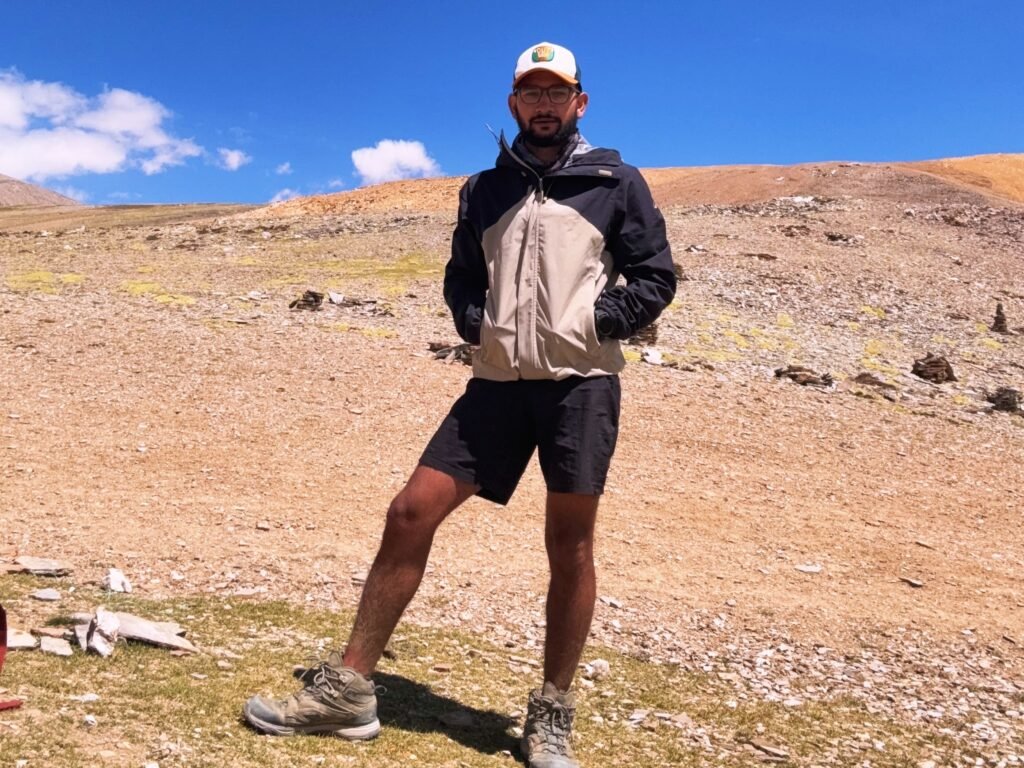
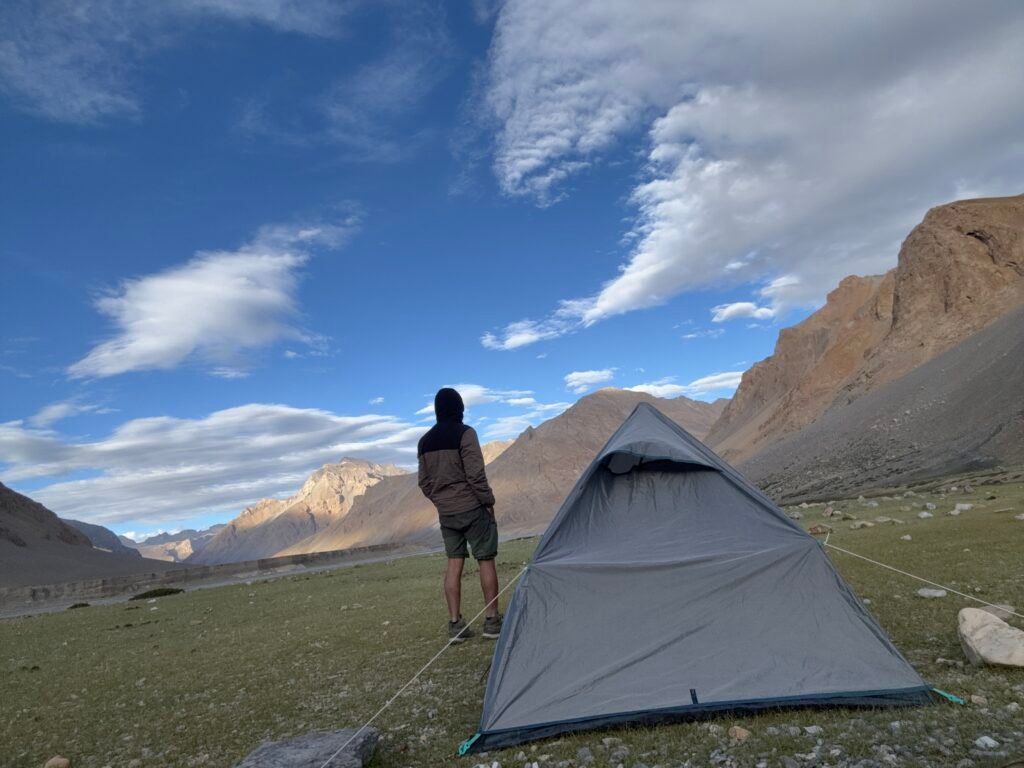
For Ladakh, I am only listing what I added or removed from the list above. This is where understanding terrain matters. Total Weight went upto 13 Kg because of carrying extra ration, as in Ladakh some sections requires minimum to cross 4 to 5 days where you won’t find any human settlements.
1. From Two Poles to One Pole: I switched to a single trek pole bought in Manali. The quality was good. I found Tripole poles are not durable for month-long traverses. And for Ladakh’s gradual terrain, one pole is more than enough.
2. A Cap is a MUST: In Ladakh, the sun is on your head all day long. No cap means sunstroke.
3. Sunscreen: Absolutely essential. The UV at 4000m+ will burn you in an hour.
4. Moisturizer – Which I missed, and it’s a must. My skin cracked badly. Don’t make my mistake.
5. Tent Hack for Ladakh: You can manage with just the outer layer of your tent in Ladakh. I didn’t face a single rainy day while camping there. But remember, when you camp above 5000 meters, it will be close to 0°C at night. Make sure you have a good sleeping bag or a sleeping bag liner for extra warmth.
6. Emergency Ration Change: I switched to ∼10 small soup pouches, more ORS packets, jaggery, and milk powder. It’s lighter, gives you warm hydration, and instant energy in cold desert winds.
7. Oxymeter: An Important equipment to keep a tab on your saturation level as Ladakh is completly High altitude. In starting day while acclimatizing, i strongly recommend to keep an eye how your body responding to when you are increasing altitude. As i followed a proper process of acclimatization, at highest altitude where i slept which was at 5200 meters my saturation level was 81% and i was having no headace, although a sleepless night which is normal.
I will be writing a detailed blog on food management – how I planned calories, where I restocked, and how I managed 30km days on minimal food.
What’s your take? Would you add or remove anything from this list? Do you have any Questions? Let me Know your thoughts below.