I Hiked 1100+ KM Solo and Self-dependent in Indian Western Himalayas
From Uttarakhand to Ladakh, 35+ passes and 1100km+ solo. First Indian to do it self-supported. Why I did it and how you can too.
Like most kids from the 90s, I grew up watching Man vs Wild. Somewhere in our childhood, all of us dreamt of having that same experience once – just us, alone in the wild.
But as we grew up, those dreams faded. We got busy chasing careers and goals.
I wanted to join the Indian Army and live that adventure life. Life had other plans. I moved on, became a network engineer, but that feeling never left me – the idea of being all alone in the jungle, disconnected from the world, surrounded by nature where you don’t know what will happen in the next second. It keeps your mind alert. It forces you to be alive every single second.
One evening, sitting at home, I was recreating all of that in my mind. The imagination was so powerful that I decided that day – I have to live it for real.
But before that, I needed skills. I needed to know how to survive and what to expect.
I started with map reading. That’s when I came across Peter Van Geit – someone who had actually lived that life. I read his work, met him, and learned the real basics: what mapping apps hikers actually use, how to manage food for weeks, and what self-dependence really means.
After that, I completed my Basic Mountaineering Course from HMI, Darjeeling. That gave me confidence in my skills. Then came countless multi-day hikes. Read Here about my 55 KM hike from Kullu to Prashar Lake – Kullu-to-Prashar Lake
where I learned the most important lesson – what to carry, and more importantly, what not to carry. More detailed Blog on List of Gears, I carry in two different terrains – https://lifeontrails.in/1100km-solo-himalaya-gear-list-western-himalayas
The First Traverse: Uttarakhand
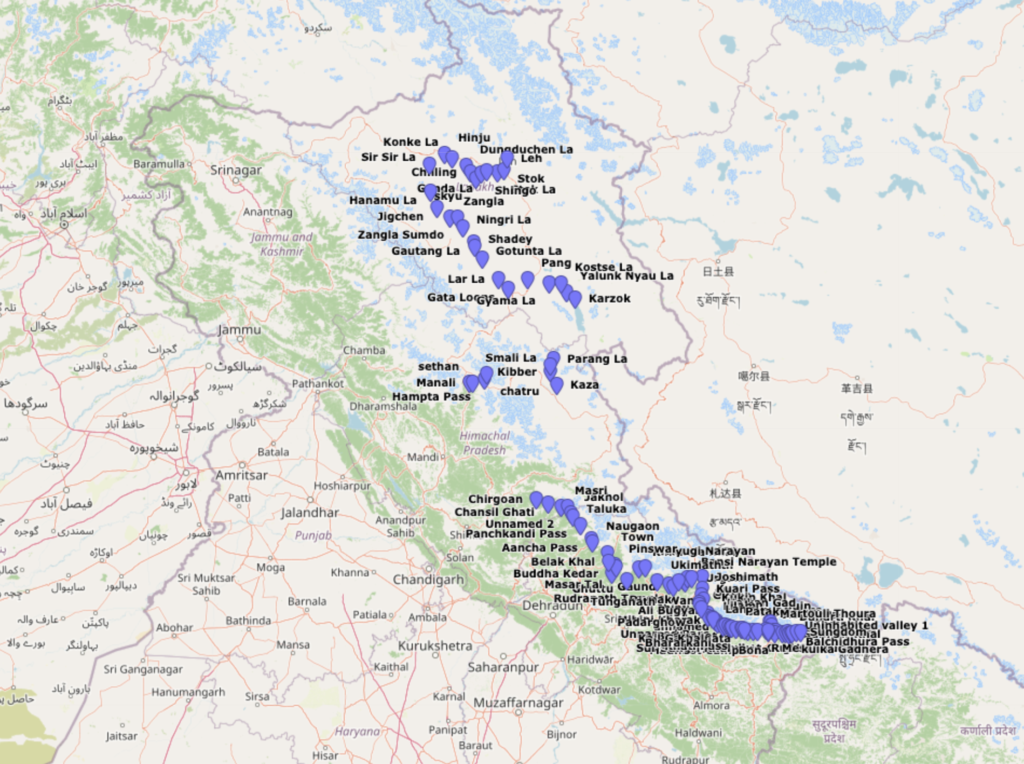
I gave myself a task: Hike across Uttarakhand, from Teejam village near Dharchula on the Nepal border to the Himachal border.
I started planning – the route, food points, gear, campsites, the right season, the longest sections, and the nearest human settlement in case of an emergency.
Then came execution. I started from Teejam.
In the coming days, I crossed Kumaon and Garhwal. Kumaon was raw and less touristic, with uninhabited valleys that felt like no one had walked there for years. Garhwal was different – full of pilgrims and trekkers because of the Char Dham and Panch Kedar.
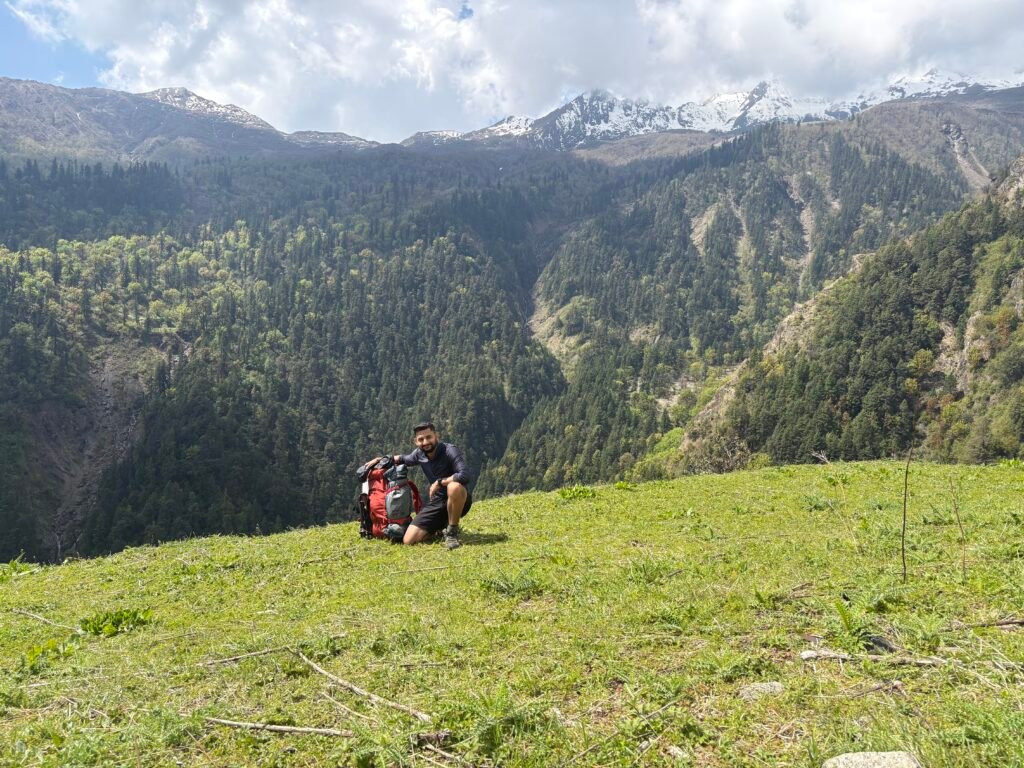
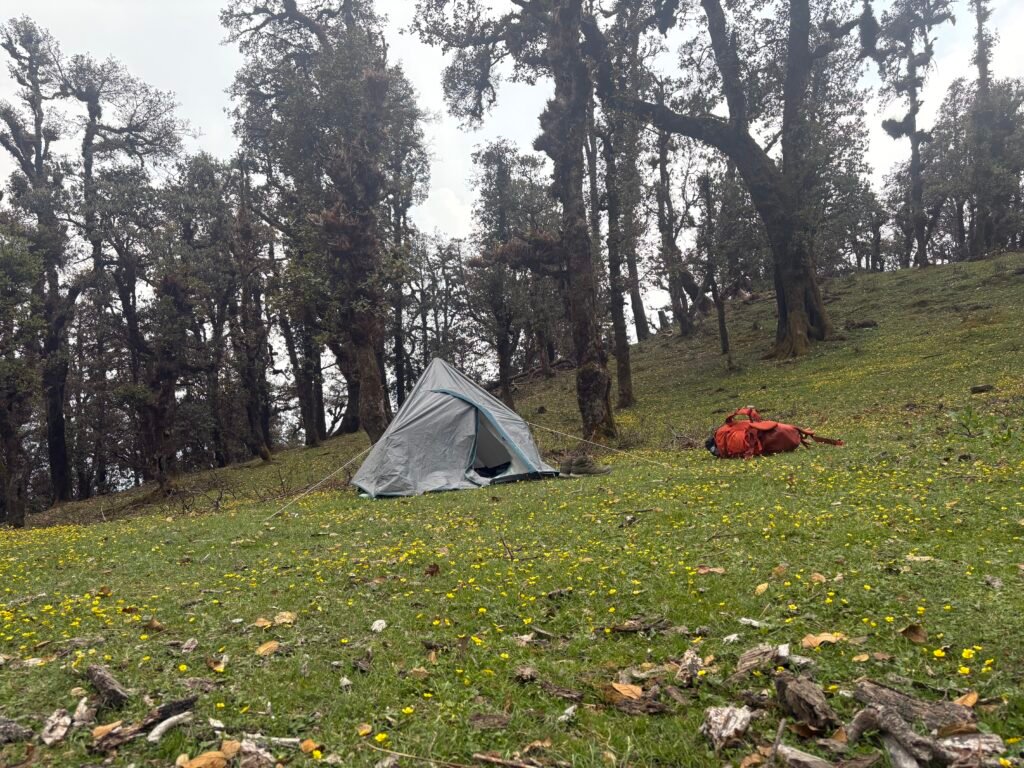
I have written here a blog about the Traverse in detail from where you can download the route GPX file, Sections in Traverse, Elevation Profile, Distance and Passes and Valleys in between.
During this traverse, I got the opportunity I was hoping for – to explore and record new routes. I found two unmapped routes and marked them on OpenStreetMap. That was one of the main reasons I chose this path right?
Reaching Masri village near the Uttarakhand-Himachal border marked the end of this traverse.
Completing it gave me the confidence to think bigger.
The Second Traverse: Spiti to Leh Ladakh
Same drill – planning – but this time two new factors: acclimatization and carrying more food. Some sections required me to hike for more than 5 days without seeing any settlement.
This time, the trek was from Spiti to Leh.
My entire focus was on acclimatization. I had to cross more than 15 high-altitude passes, the highest being over 19,000 ft. I started from 3,000 meters and moved slowly – 3,600m, then 4,000m, 4,500m, and the highest I slept was at 5,200m. This slow process helped me acclimatize perfectly. Read In Detail – Step-by-Step Acclimatisation Process For High Altitude Treks
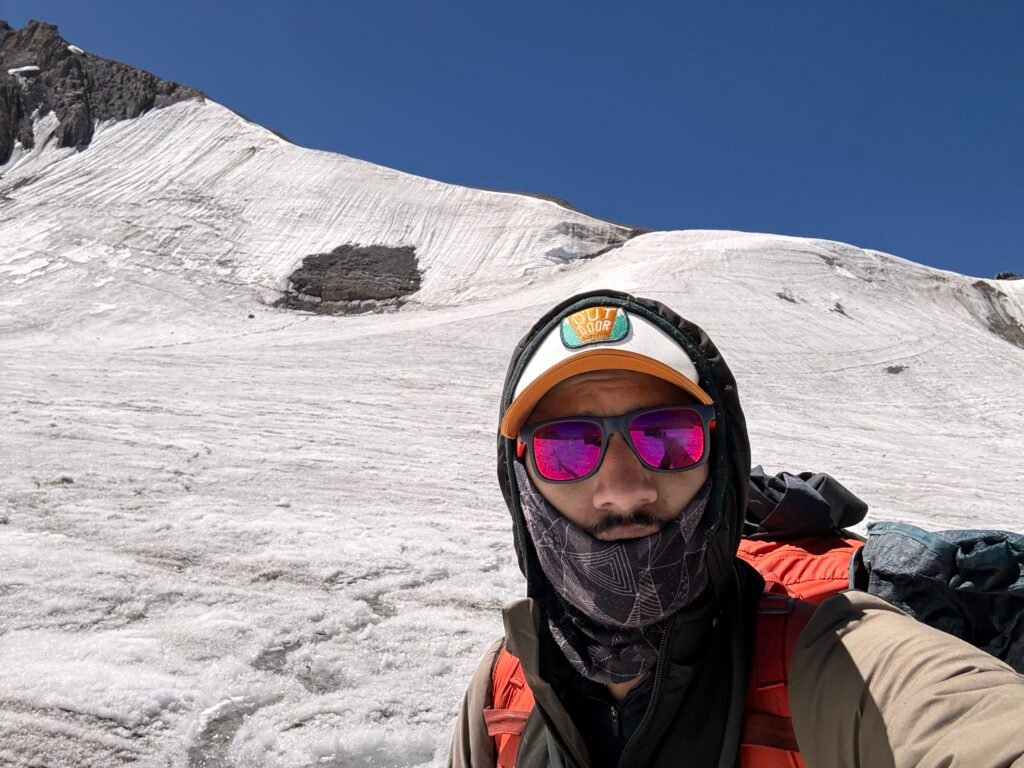

I crossed glaciers alone. Some nights I slept after eating only oats and dry fruits. On one day, after just oats for breakfast, I crossed a 5,850-meter pass and walked 40 km on water and biscuits.
Every evening I asked myself – why am I doing this? But every morning, I was up again, spirits high, ready to cross another pass, another valley. Sometimes your goal is bigger than how you feel in that moment. That thought kept me going.
Ladakh was completely different from Uttarakhand – the terrain, the altitude, the culture. And the hikers there were almost 99.9% international. They were amazed to see an Indian hiker walking self-supported.
That is the reaction I want to change.
I want this information to reach Indian hikers. I want us to walk our own trails. It gives you a different feeling – a feeling of being self-dependent in your own Himalayas.
Reaching Leh marked the end of this traverse, and I am humbled to share that I became the first Indian hiker to have hiked solo and self-supported across the Indian Western Himalayas.
I want to expand the Indian hiking community and advertise the Indian Himalayan trails to the world, so that every hiker can experience and feel what I felt while walking on these trails.
If you have ever wanted to hike a Himalayan trail on your own but didn’t know where to start, this is for you. I am building Life on Trails for you.